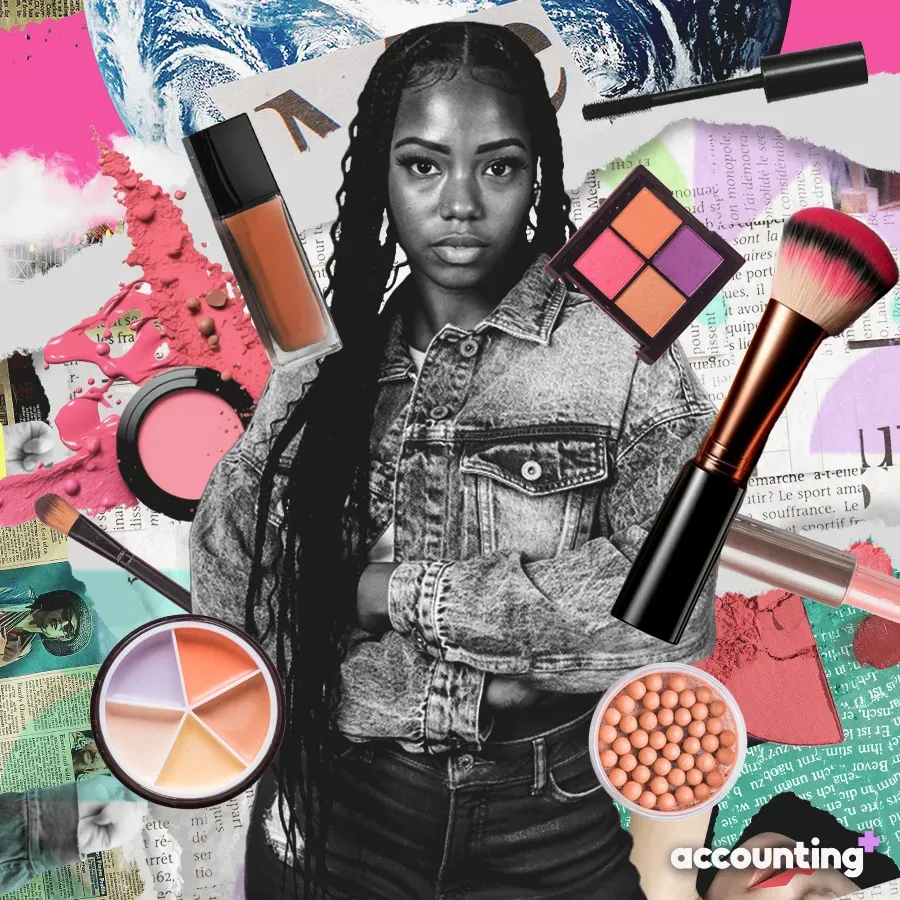
This is for the ones who are always itching for silk press season, can’t miss a lash appointment, or have an obsession with Korean skincare (you’re not alone). If you’ve been on social media recently, then you’ve seen there’s been an explosion of the beauty industry — from estheticians to lash techs to hairstylists — as an avenue to build individual wealth and reinvestment in the Black community. However, as many of us know, this is not a new phenomenon. In fact, the country’s first recorded Black millionaire was Madam C.J. Walker, a sharecropper turned mogul who earned her self-made millions through selling hair care products in the early 1900s, and inventing the hot comb. From that point on, she became a changemaker that altered the course of history.
Although not an accountant, Madam C.J. Walker took the accounting skills she developed through being an entrepreneur — such as budgeting and building a business structure — and shared them with other Black women in order to help them become economically independent. So, you tell us — are you ready to be a changemaker in your community and curate a life of financial freedom?
You probably know someone who rents a booth in a salon, creates skincare products from their kitchen, or takes braiding clients in their dorm room. Corporate America recognizes the immense buying power that Black people have in the industry, which has led to them making products tailored to the Black community. However, ironically enough, Black entrepreneurs have had the hardest time receiving private investment for their beauty brands.
According to a report by Crunchbase, Black women startup founders in the U.S. have only been recipients of 0.34 percent of the total venture capital spent as of July 2021. This is a result of many reasons, one being that they typically have less access to business relationships or financial knowledge to push their applications to the top. When it comes to acquiring an investment, the key is being able to translate your creative idea (which founders have) into a profitable business that is scalable (this is where accounting skills come in).
Another key driver for investors is knowing how much the founder has personally invested. They’ll want to see records of how much money they’ve put towards their brand, any loans they’ve taken out, and any investment from family members or friends. Accountants are responsible for maintaining this table, which has a huge impact on whether or not entrepreneurs are chosen to be funded.
Imagine being the catalyst behind a Black-owned brand receiving funding and going on to create products designed for their people? Imagine empowering investors to see the vision of a Black beauty founder’s new technology, allowing them to break into the tech space, make waves, and go on to make millions that can be reinvested into their family and community at large? This can be a regular Tuesday for an accountant.
While many people have the perception that accounting is about pencil pushing and number crunching, it actually can be a mechanism for allowing people in your community to realize their visions. Like Madam C.J. Walker, we can impact those around us by changing the course of their stories from ideas to products on shelves to wealth for their family for generations to come. Before you know it — history is made.